Tool changers WPR5000 series
MAXIMUM FLEXIBILITY AND EFFICIENCY
OUR EXPERTISE – YOUR ADVANTAGE
Safe tool changer
The tool changer ensures maximum safety and meets the requirements of Performance Level d, Control Category 3. This is achieved by a spring-loaded piston, self-locking mechanism, optional sensors and other accessories.
Locking kinematics
A new benchmark for tool changers is set with innovative locking kinematics with locking bolts and extreme rigidity. The extremely flat design guarantees minimal torque load on the robot and allows smaller and more cost-effective robots to be used.
Endless variety
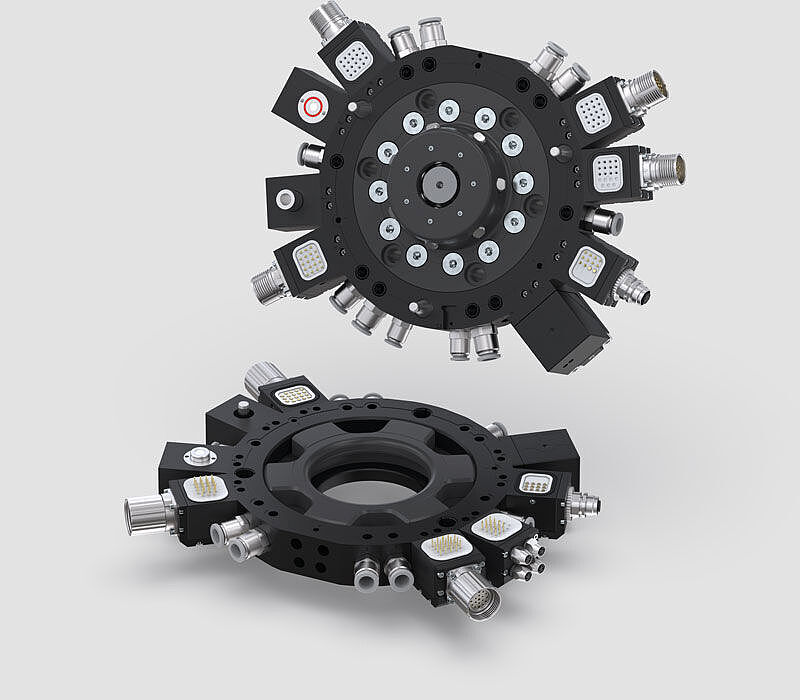
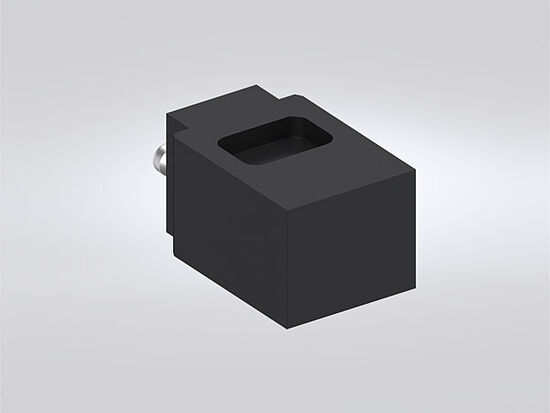
The energy elements of the WER1500 and WER3000 series allow the standardized transmission of pneumatics, hydraulics, electrical signals, power and communication and much more.
| Technical data | |||||
|---|---|---|---|---|---|
| Installation size | Connecting flange in accordance with EN ISO 9409-1 | Pneumatic power transmission [quantity] | Electric power transmission | Suitable energy elements | |
| WPR5040 | TK 40 | 4 | optional | 4x WER1500 | |
| WPR5050 | TK 50 | 4 | optional | 4x WER1500 | |
| WPR5063 | TK 63 | 6 | optional | 6x WER1500 | |
| WPR5080 | TK 80 | 6 | optional | 8x WER1500 | |
| WPR5100 | TK 100 | 8 | optional | 6x WER3000 | |
| WPR5125 | TK 125 | 10 | optional | 8x WER3000 | |
| WPR5160 | TK 160 | 10 | optional | 8x WER3000 | |
THE TECHNICAL FEATURES IN DETAIL
SERIES WPR5000

Triple protection and reliability
We set the standard for safety and reliability. The tool changer and its matching storage system are based on our well-designed 3-fold safety principle: Even if the compressed air is completely lost, the tool remains securely in place. A spring-loaded locking mechanism combined with self-locking ensures maximum stability – for reliable operation and the highest level of process reliability in any situation.


COMPREHENSIVE RANGE OF ACCESSORIES
The WPR5000 series tool changers offer a comprehensive range of accessories that significantly increase the efficiency and easy of use of your automated processes. These accessories allow seamless integration into existing robotic applications and ensure maximum reliability and operating convenience.
The storage stations
Flexibility
Two storage stations have been developed for the WPR5000 series tool changers. The first version has an integrated in-plane axis compensation module and secure loose-part locking. The second version is a classic variant.
Safety
The integrated spring-loaded locking mechanism ensures that the loose part is changed only by the robot. This prevents the parts from being mixed up.
Sensors
Optional sensors are available for loose part monitoring and for piston position sensing at the storage station.
Storage station
AWPR5000-00-A
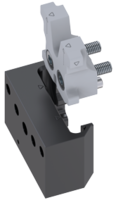
Storage station with axis compensation module and loose-part locking
AWPR5000-10-A
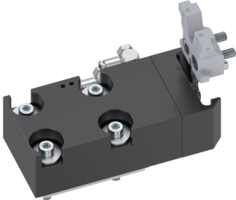
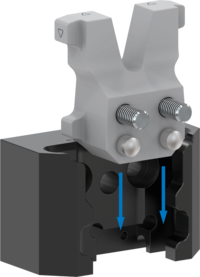
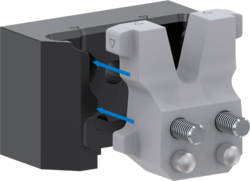
The standard variant
Two types of storage
With the right AWPR5000-00-A storage station, you can flexibly use two different storage methods. For one thing, the workpiece can be fed into the station from above. Or it can also be positioned from the front. This allows you to remain flexible during tool changes, even in confined production environments.
Pneumatic variant
With axle compensation module and loose-part locking
The AWPR5000-10-A storage station offers enhanced safety and flexibility. The integrated axis compensation module provides enough tolerance to ensure a safe storage process when needed. The storage station can be used in two ways – with or without the unlocking latch. That also depends on whether a pneumatic supply is available during the storage process.
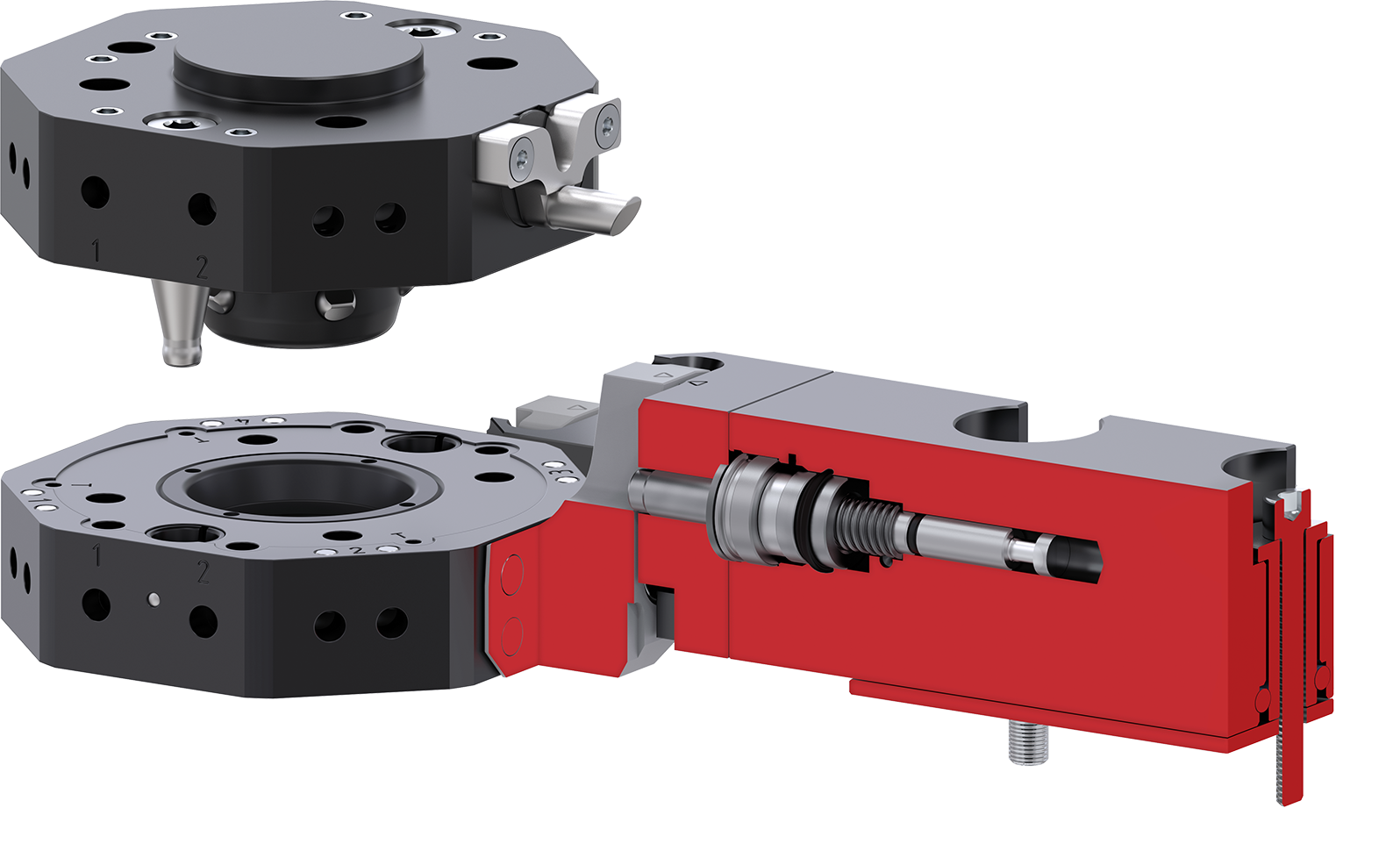
Piston position sensing
The piston position sensing using 2-point magnetic field sensors enables simple and reliable position monitoring of the locking mechanism. Unlike conventional systems where the sensors are mounted on top of the tool changer, the WPR5000 series features side integration. This maximizes the use of the installation space and minimizes the interference contour of the tool changer.
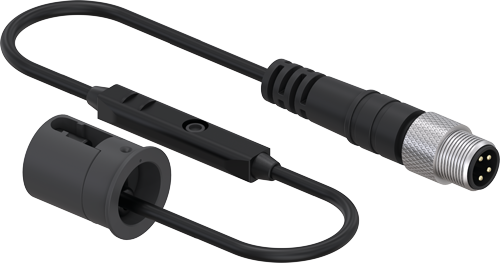
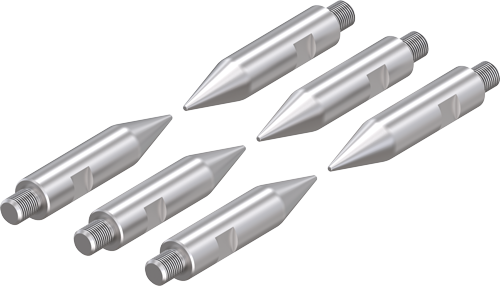
Programming tips
The programming tips provide an intuitive and simple way to make the teaching and programming process as easy and efficient as possible for the user. In addition, there are also markings on the storage station and on the suspension system for the loose part that significantly simplify the process of setting up the tool changer on the robot.
Always the right transmitter
Energy elements
ENDLESS VARIETY
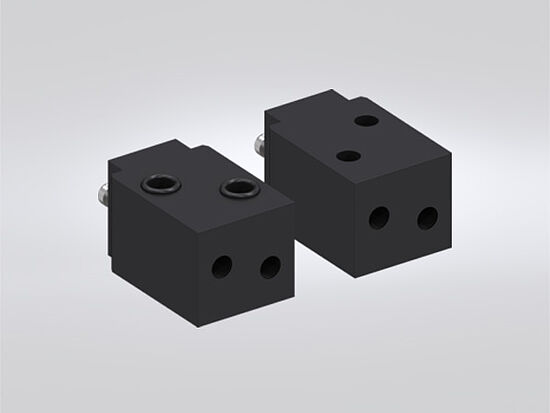
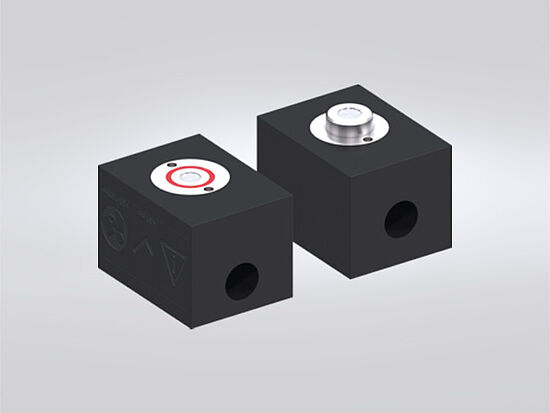
Energy elements are the most important accessories for tool changers and are essential for transmitting a wide range of different media from the stationary part to the loose part. All tool changers offer integrated air transfer systems as standard. If larger or smaller cross-sections are needed, energy elements can be used. In addition, almost all media such as the load current, signal current, hydraulics and communication can be transmitted using energy elements.
Our expertise – your advantage
- Standardized: Uniform interfaces and a modular design ensure flexible and cost-effective integration into all applications.
- Integration: Components can be integrated seamlessly into existing systems and processes.
- Innovative: The most modern technologies for efficient and future-proof solutions.
Types of connections
Plug-in connectors or spring contacts
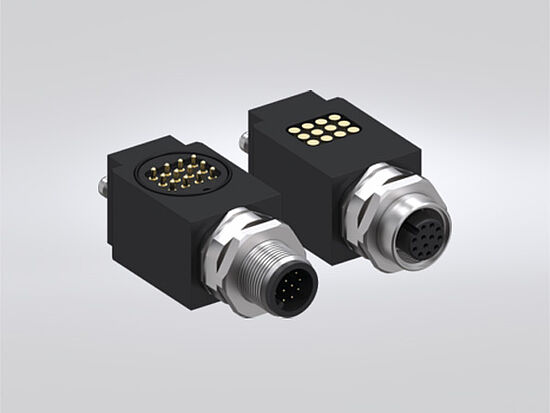
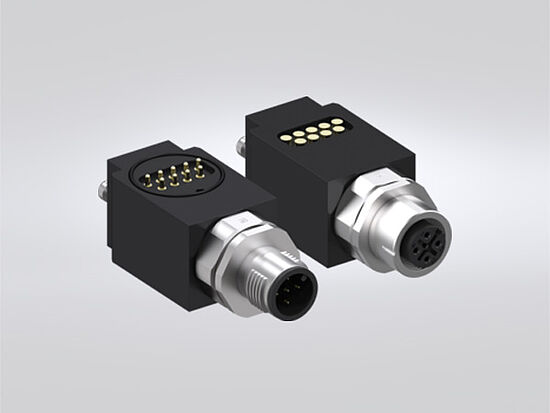
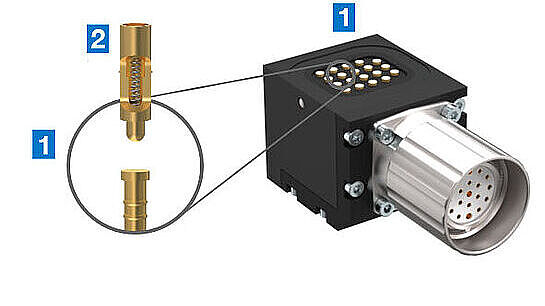
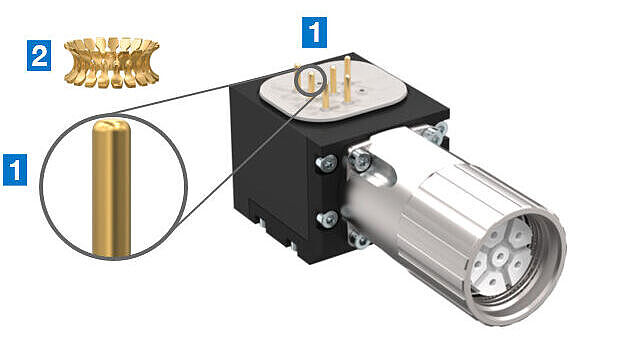
For our energy elements, you can choose from two proven connection types: Plug-in connectors and spring contacts. Which solution is more suitable depends primarily on your application, the environmental conditions and the electrical requirements.
Spring contacts , on the other hand, are designed for voltages up to 60 V and currents up to 3 A. They require less installation space and are extremely easy to separate from one another.
Plug connections offer a long service life and are less susceptible to dirt and moisture. In addition, they are suitable for high voltages up to 600 V and currents up to 15 A, as well as for high signal quality. They are therefore ideal when durability and performance are the top priorities.
Radial or axial connector outlet
Standard or easily converted
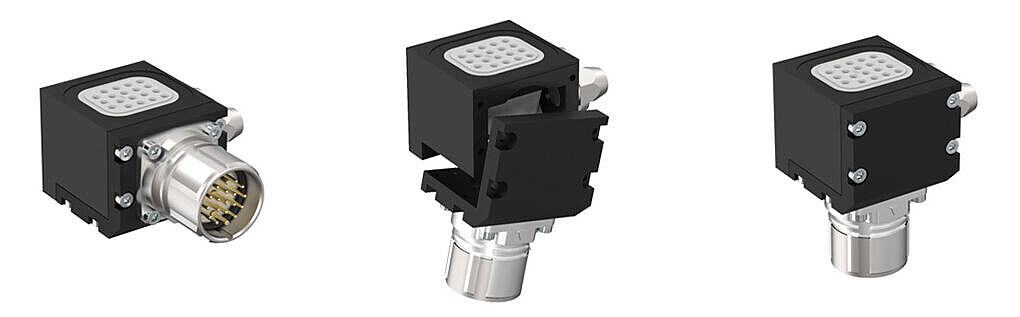
Our energy elements come standard with radial connector outlets. However, if your installation requires an axial connector outlet, many energy elements in the WER3000 series can be adapted quickly and easily:
To do this, simply loosen the eight screws, rotate the bracket with the connector to the desired position, then secure it again with the eight screws. Done! This allows you to flexibly adapt the connector outlet to your application without changing the overall design.
For more information about our energy elements, click here:
FAQ: Energy elements