Inline tolerance compensation without interrupting production
For OEMs and system integrators in the automotive, aerospace and mechanical engineering industries
In modern manufacturing processes, shim units play a crucial role in compensating for manufacturing tolerances. During the process known as shimming, the units compensate for deviations of between one and one thousandth of a millimeter to ensure precise fits and optimal clearances. Shimming often used to rely on the experience of the operators, which made it a time-consuming and error-prone process. However, as automation levels increase and quality requirements become more stringent – particularly among OEMs in the automotive and aerospace industries – this approach is reaching its limits.
Raise your production line to the next level and let us advise you on our shim units!
Non-stop production
When tolerance deviations are corrected during operation
Automated shimming enables consistent, repeatable and highly precise tolerance compensation:
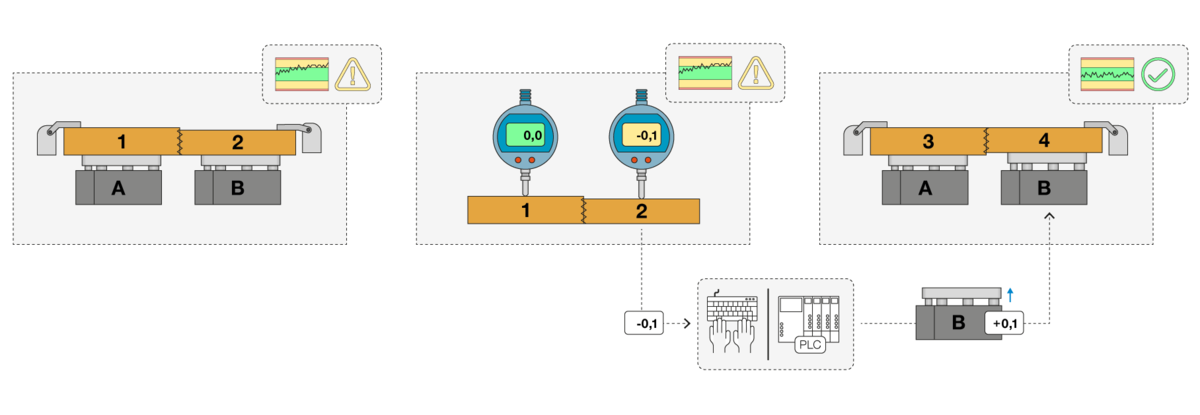
- Measuring system detects deviations in real time
- Data is transmitted directly to the shim unit
- Automatic adjustment takes place without stopping production
Shim units for every application
Our portfolio
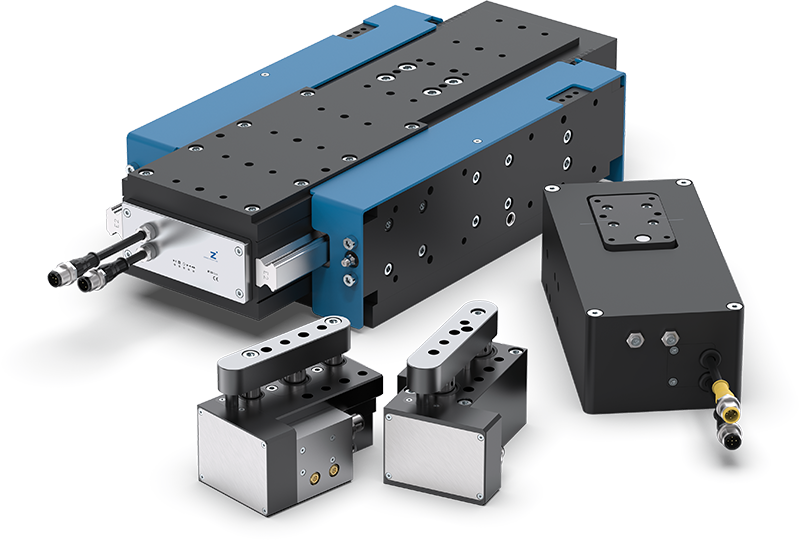
Our products incorporate the expertise gained from decades of experience in automation – and our shim units are no exception. This enables us to provide you with the ideal product for every application, tailored to your specific needs:
Your benefits:
- Long-standing development partner to leading automotive manufacturers
- Comprehensive automation expertise from a single source
- Solutions tailored to your needs
- Service: One single point of contact for everything from consulting and development to integration
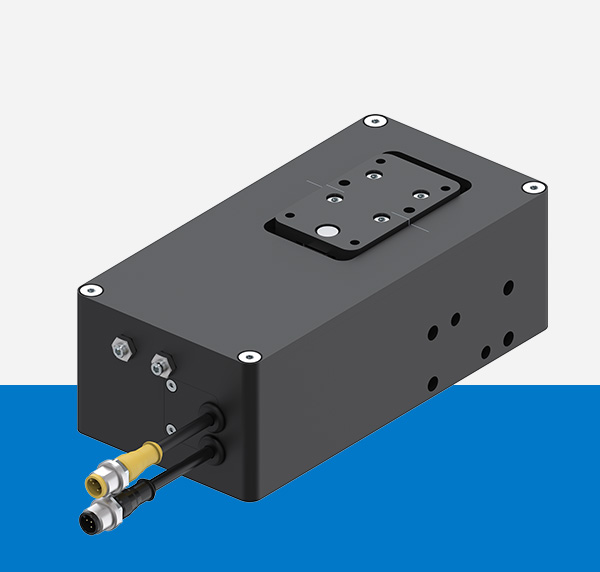
Small E-SHIM (electric)
01SYS002286-02

Technical data:
- Maximum stroke: +/-6 mm
- Self-locking mechanism: Mechanical via worm gear
- Pressure force: 50 N
- Speed: 60 mm/s
- Current draw: 5 A
- Voltage: 24 V
- Repeat accuracy: +/-0.05 mm
- Position sensing: Integrated
- Drive: BLDC motor
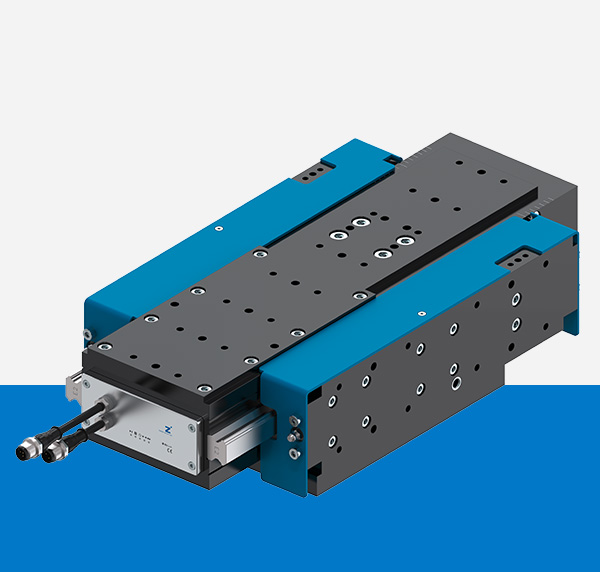
Large E-SHIM (electric)
01SYS002286-03
Technical data:
- Travel path: +/-25 mm
- Load capacity: Up to 150 kg moving mass (with gearbox) / up to 180 kg static load
- Positioning accuracy: <0.05 mm
- Integrated encoder
- Interface: IO-Link with separate power supply for load and encoder signal
- Movement speed: 10 mm/s
- MBPS2001AS1 clamping device installed. Holding force 2x 900 N
- Integrated air supply to the clamping device
- Recirculating ball spindle with pitch P=5 mm
- Linear rail slide with rail size 20 mm
- Signal voltage for the encoder must be ensured
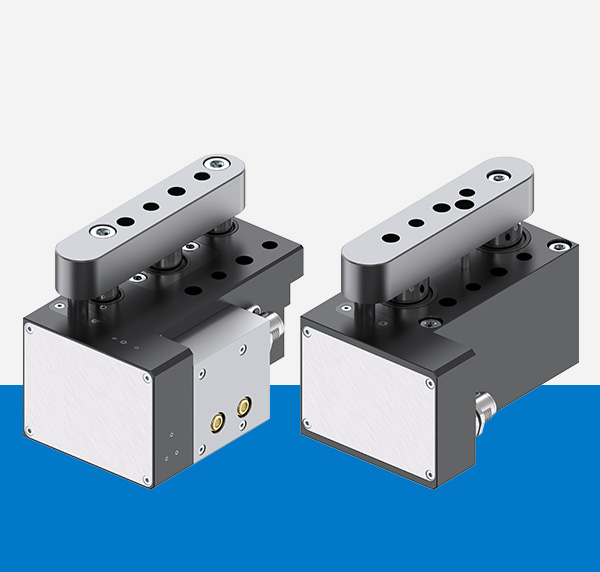
Flex shim (pneumatic/electric)
What is included?
Technical data:
- Maximum stroke: +/-5 mm
- Self-locking mechanism: Mechanical via spindle and nut
- Holding force: 1,800 N
- Speed: 0.5 mm/s
- Position sensing: Integrated
- Pneumatic valve and control system: Integrated
- Drive: Pneumatic / 2x pistons with lift cylinders
What are the benefits of automated shimming?
The goal: Reduce costs and throughput times


The goal of automated shimming is clear: More precise, faster and more reproducible tolerance compensation in highly automated manufacturing processes. Unlike manual processes, automated shimming takes place in real time without interrupting production. The shim units are fully integrated into the control system and can be operated via the PLC or manually.
Real-world examples:
- Body-in-white assembly: Flexible shim units for positioning
- Fender assembly: Precise alignment to the millimeter
- Gripper systems: Compensating for variations in sheet thickness to optimize gap dimensions


FAQ – Frequently Asked Questions about shimming
Shimming describes the targeted compensation of dimensional deviations between components through the use of what are called shims (compensation modules). The goal is a precise fit and optimal functionality.
Automated shimming offers crucial advantages:
- Greater precision and repeat accuracy
- Reduction of errors caused by human factors
- Faster processes without production line downtime
- Scalability for high-volume production
A test station measures the actual component deviation. This data is transmitted to the shim unit, which automatically adjusts to the required position. The control system is performed either:
- via a PLC with stored data records
- or by manual entry
No. Our shim solutions operate inline – which means that tolerance compensation takes place during the production process without interruption.
OEMs benefit in particular from:
- Reduction in labor costs
- Shorter cycle times
- Consistent product quality
- Flexibility in variant production