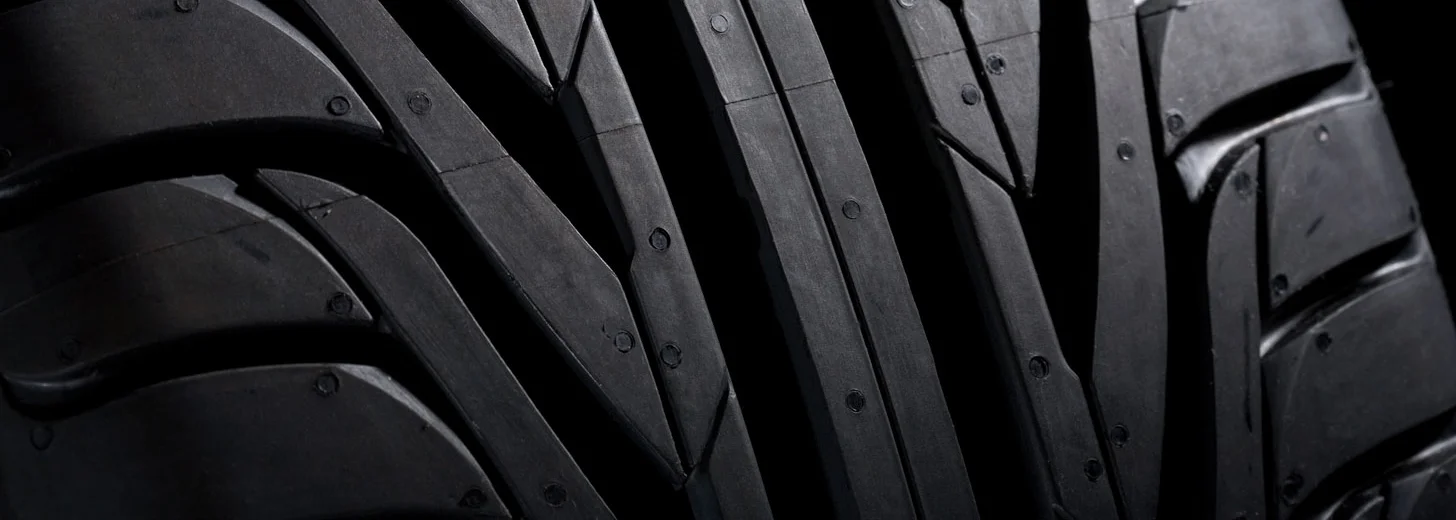
 Image generated with AI
Automation solutions for tires, rims and wheels
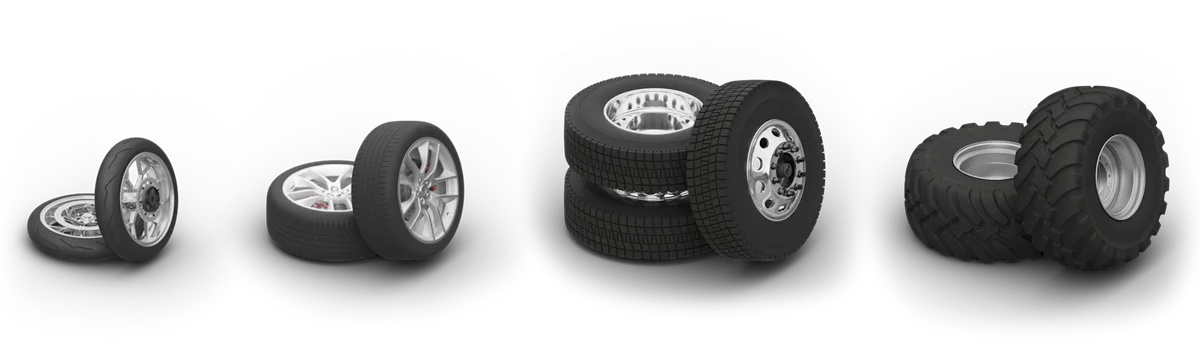
From calendering to palletizing the finished tires. Automation solutions are crucial for companies in the wheel production industry to ensure cost efficiency and throughput. With numerous projects and hours of development in the areas of tires, rims and wheels, we have an impressive wealth of experience. Our team supports you from concept to implementation. What sets us apart is our comprehensive automation expertise, which covers various tire categories. Whether motorcycles (two-wheelers), passenger cars (PCR), trucks (TBR), or off-road vehicles (OTR)—we have the expertise and capacity to master any production challenge.
We understand your unique requirements and tailor our solutions to your specific needs. Talk to us about your specific requirements—we’d be happy to help you further optimize your production!


From the green tire to the finished tire
Our expertise includes:
- Knowledge of the processes and quality requirements in tire and rim manufacturing
- A wide range of standard industry products tailored to most of your application needs
- Automation to address complex manual tasks
- Preliminary studies to assess feasibility
- ►Raw materials
- ►Calendering
- ►Cutting
- ►Assembly
- ►Loading
- ►Unloading
- ►Storage
- ►Trimming
- ►Inspection (visual, balancing, X-ray, load testing & motion)
- ►Stacking
- ►Palletizing
- ►Depalletizing
- ►Truck loading
- ►Shipping
Precision in tire manufacturing
Precision right from the very first step: During the assembly of the green tire, reliable Zimmer Group gripping systems ensure safe and gentle handling—even with varying sizes.
Your benefits: High process reliability and flexible customization thanks to standardized system technology.
View matching gripping systems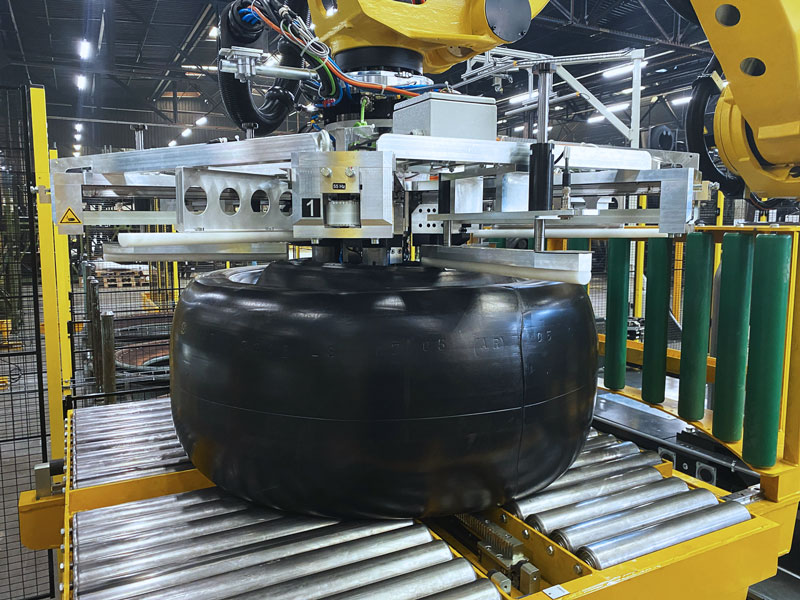
Quality Under Pressure
Vulcanization is a key step in tire manufacturing, where the material is processed at high temperatures. During this hot phase, absolute process stability is essential. Our high-performance gripping systems enable safe loading and unloading of the tire press—robust, durable and designed for high cycle rates.
Your benefits: Minimal downtime, durable systems and consistently high tire quality.
View matching gripping systems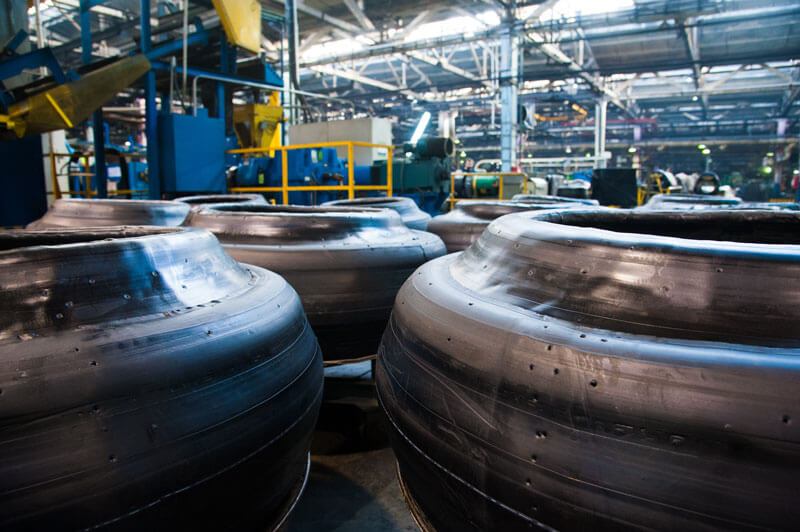
Trimming, inspecting, stacking
From trimming to high-precision inspection: Our end-of-arm tools and gripping systems ensure smooth operations and gentle transport of parts—perfect for delicate surfaces and the highest quality standards.
Your benefits: High precision, optimized production processes and increased efficiency.
View matching gripping systems
Sophisticated (de-)palletizing
Storage management for finished tires: Structured storage is crucial in wheel and tire production. Our standardized gripping systems efficiently palletize or depalletize tires—ideal for high throughput in logistics and production.
Your benefits: Faster throughput times and efficient tire logistics.
View matching gripping systems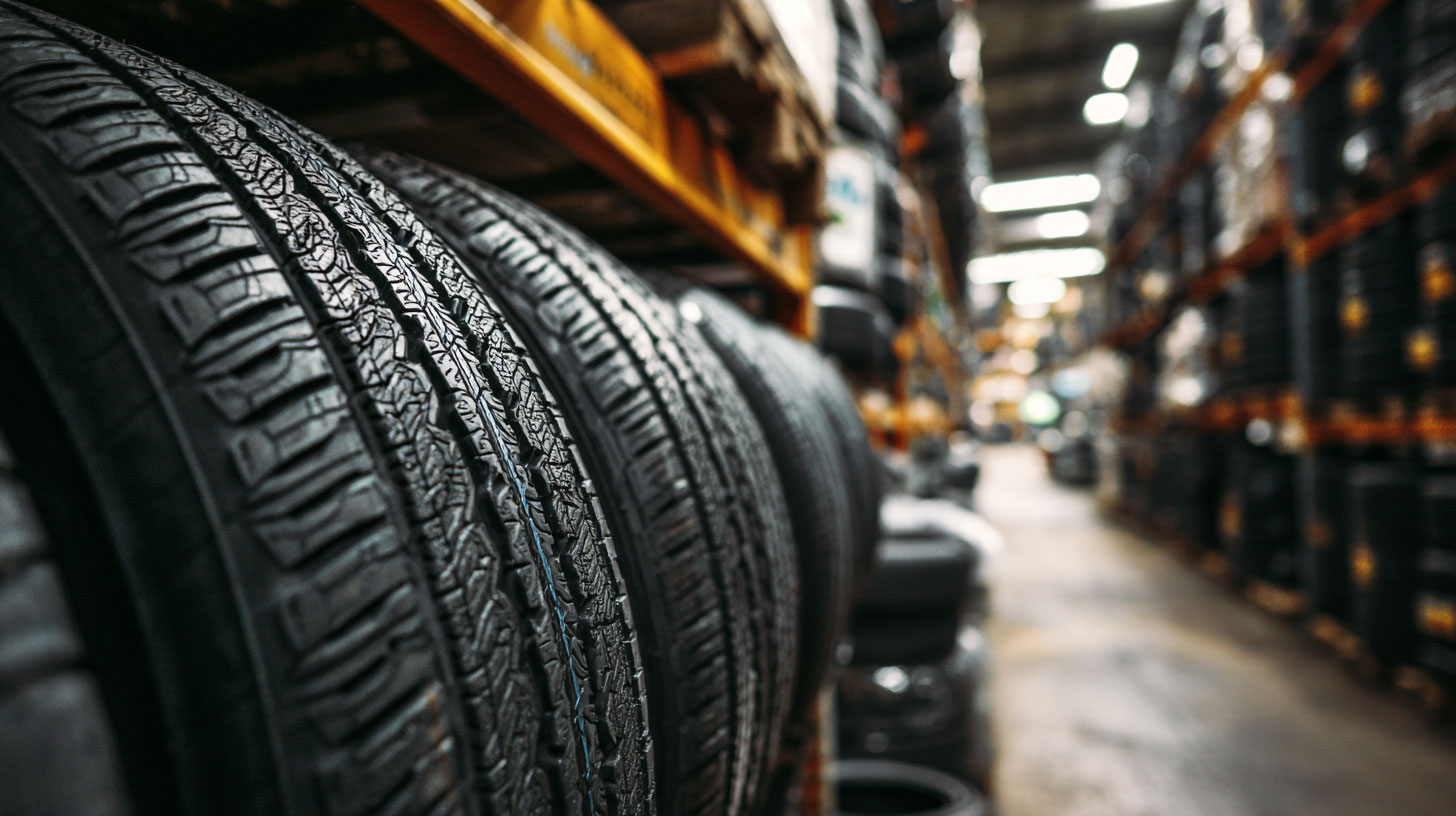
From truck loading to shipping
From manufacturing to shipping: Zimmer Group gripper systems enable controlled handling for everything from internal transport to truck loading.
Your benefits: Safe handling, reduced operating costs and smooth operations.
View matching gripping systems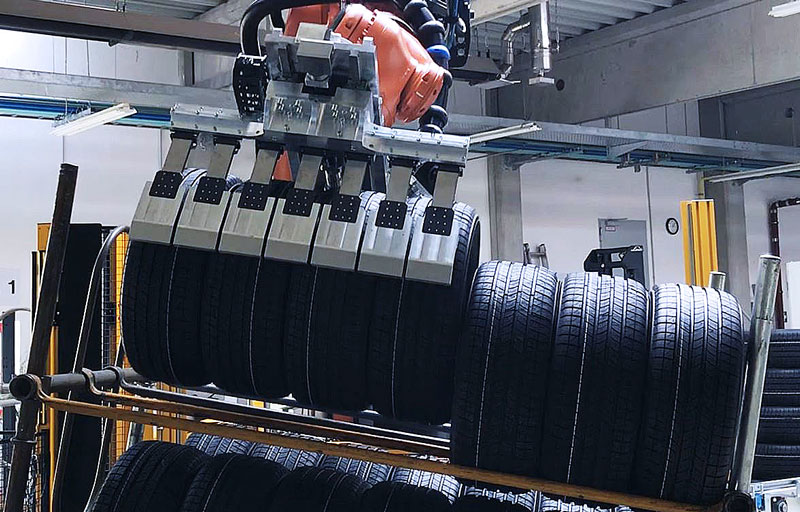
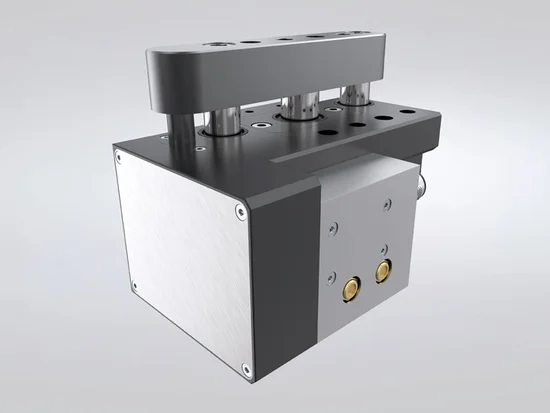
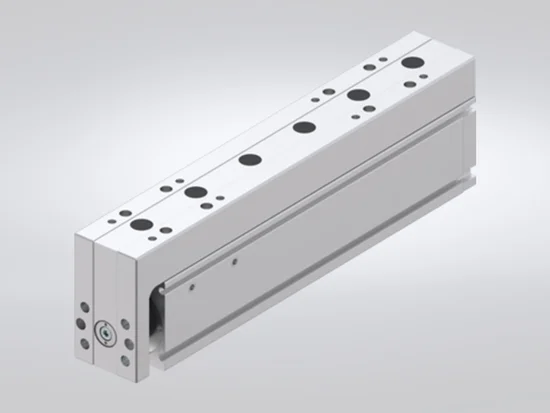
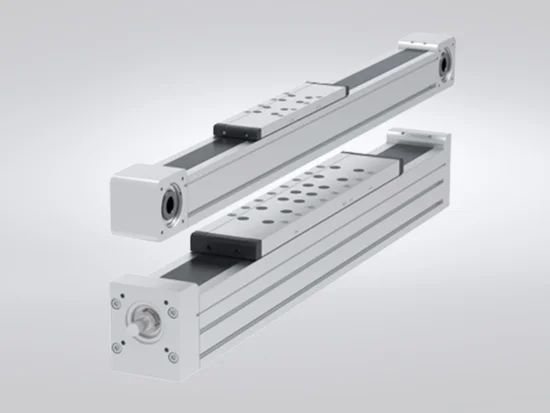
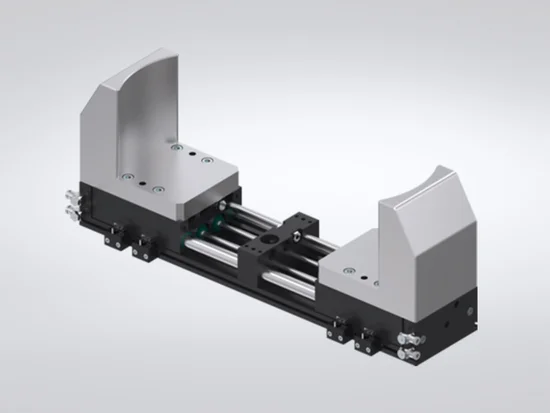
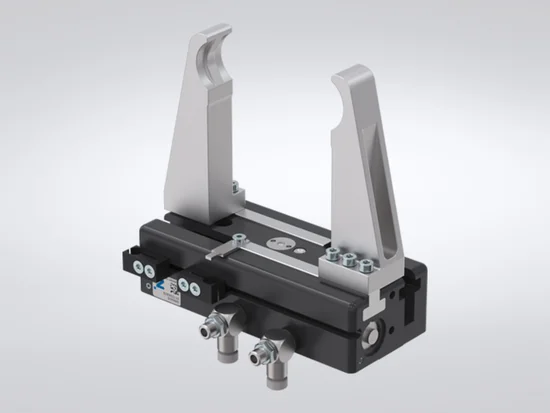
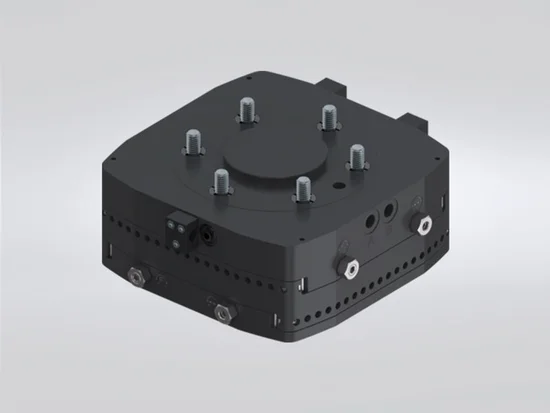
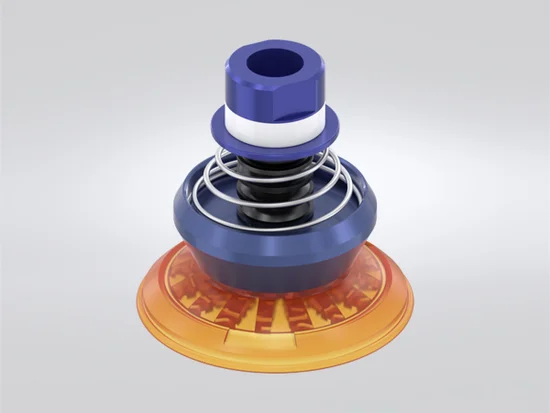
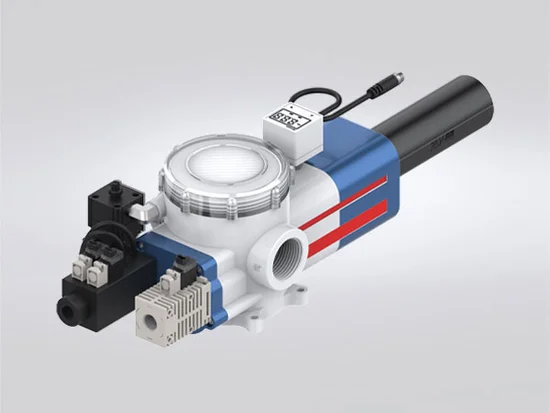
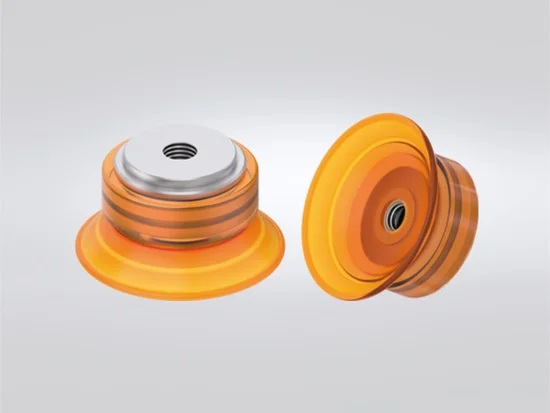
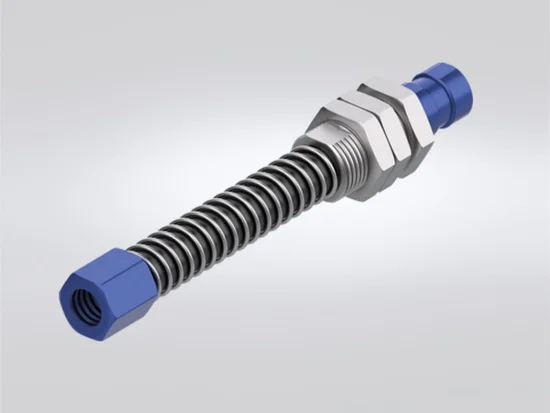
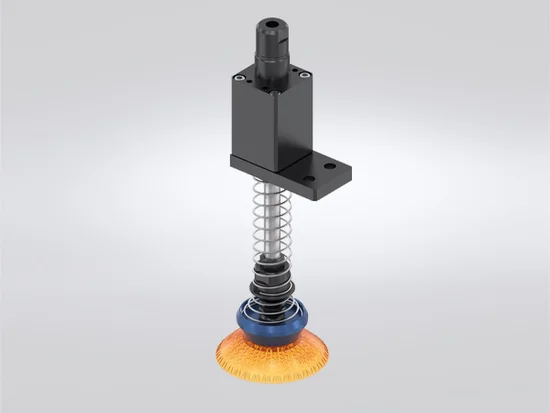
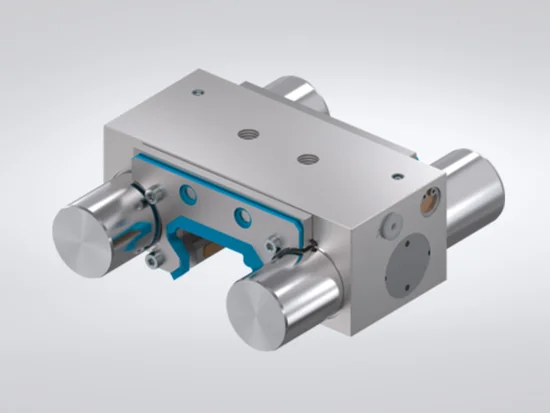
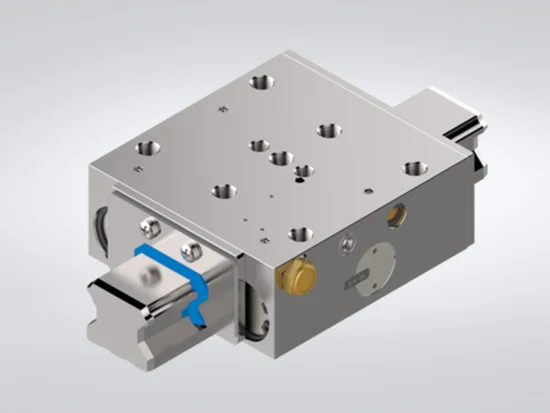
Components for automated tire and wheel manufacturing
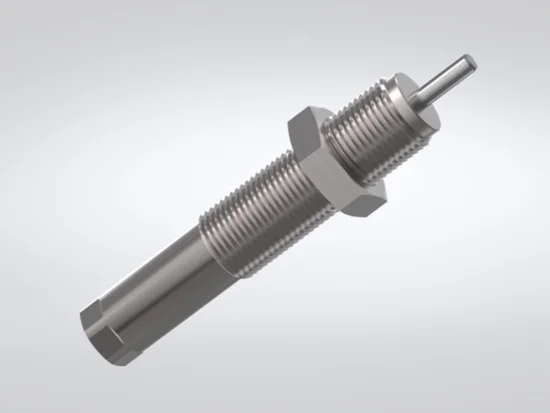
FAQ – Tires, rims and wheels
General
Handling and intralogistics processes—that is, the flow of materials between individual machines—can be automated especially efficiently. End-of-line applications, such as the palletizing of tire stacks or individual tires, also offer significant potential for automation. This integration can reduce the need for manual intervention and significantly increase productivity.
Automation ensures consistent quality, lower reject rates and stable production processes. Less manual labor also means lower production costs and improved ergonomics for employees. Especially in a highly competitive market, increasing efficiency and process reliability is a decisive competitive advantage.
The differences lie primarily in the size and load capacity of the grippers, as well as in the dimensions of the machines used. While high output volumes and short cycle times are the main priorities for passenger car tires, truck and off-road tires require more robust systems. Our solutions are designed to be flexibly adapted to different tire sizes and production requirements.
Process and application depth
We offer specialized gripper solutions for material handling in tire manufacturing—such as for rubber blocks or rubber strips. These systems enable precise, gentle and reliable handling, even with sticky or delicate surfaces. Thanks to their modular design and customizable gripping jaws, our systems can be flexibly integrated into any production line.
Our so-called green tire grippers are designed to handle a variety of tire sizes and production steps. Depending on the application, we use either internal or external gripping systems with 3 to 6 jaws to securely hold the tire in place. The result is stable, repeatable processes that deliver high quality—from the green tire to the fully vulcanized tire.
In the finishing stage, we rely on gripper systems with variable gripping modes that can safely handle tires at different stages of production. A precise control system ensures damage-free handling—a crucial factor for consistently high quality. Upon request, our systems can be combined with inspection or measurement components to integrate quality controls directly into the process.
For warehousing and transport processes, we offer palletizing and stacking grippers that can handle both single and multiple tires simultaneously. These solutions are also suitable for rick-rack applications and can be integrated into automated guided vehicle systems. This ensures that the entire material flow between production steps is automated, safe and efficient.
Integration & technology
Our systems are modular in design and can be seamlessly integrated into existing production lines. Upon request, we handle the entire customization process—from mechanical integration to control technology. Through close coordination with the customer, we develop a solution that fits perfectly into the existing infrastructure.
Zimmer Group components are compatible with all common control systems, such as Siemens, Beckhoff and Rockwell. Depending on customer requirements, the interfaces can be customized to ensure seamless communication. This allows our solutions to be integrated into both new systems and existing production lines.
In addition to our proven industry standards, we develop custom solutions tailored precisely to our customers’ processes. Every standard gripper can be customized in terms of design, gripping method or control system. This allows us to combine the advantages of proven systems with the flexibility of a customized solution.
Quality, safety & efficiency
All components that come into contact with workpieces are designed to not damage sensitive materials such as raw rubber or finished tires. Through simulations, test runs and special coatings, we ensure that the systems consistently deliver high quality. As a result, our solutions meet the high standards of international tire manufacturers.
Automated processes reduce downtime, prevent material waste and ensure consistent production conditions. The precise use of energy and resources lowers operating costs while also protecting the environment. This way, our systems not only support efficiency but also manufacturers’ sustainability goals.
Reproducible motion sequences minimize sources of error and prevent damage to materials. Precise grip force control and optimized process parameters protect tires and tools. This significantly reduces rejects and wear—and increases system availability.
Cost-effectiveness & project management
Depending on the size of the project, the payback period is usually between one and three years. In addition to reducing labor costs, lower reject rates and shorter downtime also contribute to cost-effectiveness. Our standardized components also reduce engineering effort—and thus overall costs.
After receiving an inquiry, we work with the customer to analyze the process and develop a suitable automation solution. This is followed by engineering, simulation and testing phases, before the final on-site commissioning takes place. Thanks to our industry standards in the tire, wheel and rim sectors, project lead times are significantly reduced.